Showing posts with label Victor Hugo. Show all posts

Wednesday, 1 December 2010

The Night Owl...


On this day...A draft of Victor Hugo's 'The Hunchback of Notre Dame' was due in 1830. The original publishers, Gosselin, had already agreed with Hugo that the book would be finished in 1829 - the year in which he had started writing it. However, the huge demand for other projects, including the premiere of his drama 'Hernani', had hindered Hugo, and so the completion of the work was delayed. Put out, the publishers delievered an ultimatum, demanding the book be completed by February of 1831.

Thus it is said that Hugo, settling down with a new bottle of ink, refused to leave his house, apart from nightly visits to the cathedral, until the work was finished. It was finally pulished in January 1831, and has proved one of France's most popular books, become a literary classic all over the world, and even led to major renovations at the Notre Dame cathedral itself.

Monday, 8 February 2010

On this day...


French author Jules Verne was born in 1828. Known as the 'father of science fiction', along with contemporary H.G. Wells, Verne developed an appetite for travel early on in his life, spending summers with the ships of the Loire River. So fascinated was young Jules, that he attempted to sneak aboard a vessel bound for India, only to be caught and whipped by his father, and hence declared, 'I shall from now on only travel in my imagination'.

This he did with aplomb, yet his expanding literary career ensured the withdrawal of parental financial support, as his father had wished him to enter law. Nevertheless, Verne found support in two of the great French writers of the age, Alexandre Dumas and Victor Hugo, and found fortune with publisher Pierre-Jules Hetzel, one of the most important members of his trade in the 19th century. Verne's works, all voraciously adapted, concentrate on travel in space, underwater, and air; indeed he was, in technological fields, advanced for the age. Some of his most recognisable novels include, 'Twenty Thousand Leagues Under the Sea', 'A Journey to the Centre of the Earth', and 'Around the World in Eighty Days'. Behind Agatha Christie, Verne is the most translated author.

Wednesday, 6 January 2010

Nicolas Sarkozy: President or grave-robber?...


French intellectuals are up in arms over Sarkozy's latest publicity stunt. An avid reader of Albert Camus from a young age, the French President has decided to move the writer's body to the Panthenon in Paris; the resting place of many of France's literary treasures such as Voltaire, Victor Hugo, Emile Zola and most recently Alexandre Dumas. Yet the move has caused outrage amongst Camus' fans, who refuse to accept the idea of right-wing president taking the body of a left-wing champion or an anti-intellecual, as Sarkozy is often called, grave-robbing an intellectual. The debate is likely to continue for some time.

Saturday, 5 December 2009

On this day...


French author Alexandre Dumas died in 1870, at the age of 68. Grandson of the Haitian artillery High Commissioner, Dumas family had numerous military connections; his own father was a general in Napolean's army. It was this that inspired much of Dumas' subsequent literature, his widowed mother regaling her son with stories of his father's military heroism. A participator in the political scene, Dumas helped to oust Charles X and place Louis-Philippe I on the throne, ending press censorship and revitalising the ecomony; both crucial for helping Dumas to achieve his success. Dumas' works have been translated into almost 100 languages and have been the inspiration for over 200 films; his most famous being, 'The Count of Monte Cristo' and 'The Three Musketeers'. Dumas' body was exhumed in 2002 to be buried in the Panthenon alsongside French literary greats Emile Zola and Victor Hugo. President Chirac, present at the ceremony, said of Dumas; 'With you, we were D'Artagnan, Monte Cristo, or Balsamo, riding along the roads of France, touring battlefields, visiting palaces and castles — with you, we dream.'

Friday, 20 November 2009

On this day...


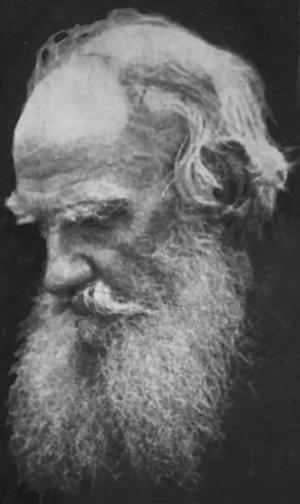
Russian realist writer Leo Tolstoy, died in 1910 at the age of 82. Descended from Russian aristocracy, he was described at university as 'both unable and unwilling to learn', and he left, amounting huge gambling debts and evenutally joining the army. Tolstoy's transformation into the literary talent he is recognised as today, occured during a trip to Europe, where he met Victor Hugo, author of 'Les Miserables'. Inspired, Tolstoy went on to produce some of the best known works of Russian literature, 'War and Peace', and 'Anna Karenina'; which he used to convey a realistic perspective of the Russian society in which he lived. He was praised by his contemporaries; Chekhov saying of him, 'What he does, serves to justify all the hopes and aspirations invested in literature.' Yet Tolstoy himself proved a harsh critic, telling Chekhov, 'I think Shakespeare's plays are terrible, but yours are even worse'. Indeed, Shakespeare was widely criticised by Tolstoy throughout his lifetime, Tolstoy confessing to feel 'an irrestitible repulsion and tedium' while reading his works. Alongside fellow writers Dostoyevsky, Chekhov and Pushkin, Tolstoy is considered part of Russia's golden age of literature.