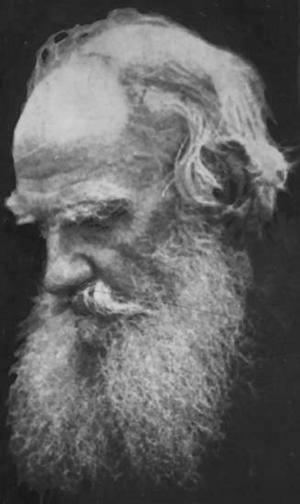
'The man who does not read good books has no advantage over the man who cannot read them'
Mark Twain
Mark Twain
Showing posts with label Fyodor Dostoyevsky. Show all posts
Sunday, 17 January 2010
On this day...
Miguel de Cervantes' 'Don Quixote' is first thought to have been published in Madrid in 1605. Although many aspects are disputed, right through from the date of publication to even the authorship, it is widely regarded as the first modern novel in Western culture, and the finest work in the Spainish literary canon. The novel, which Fyodor Dostoyevsky described as 'the ultimate and most sublime work of human thinking', belongs to the picaresque genre; depicting the tale of a rougish hero with satirical wit. The idea of ''Don Quixote' has translated into other areas of modern culture. Recently voted 'The Greatest Book of All Time' by the Nobel Institute, it is referenced several other important works, including 'The Three Musketeers', and 'The Pickwick Papers'. The novel also contains many 'firsts'; a woman complaining of her menopause, someone with an eating disorder, and the coined phrase 'the proof of the pudding is in the eating'. Even ingrained in the English language, it is responsible for adjective 'quixotic'; the desire to perform acts of chivalry in a radically impractical manner.
Labels:
Fyodor Dostoyevsky,
Miguel de Cervantes,
on this day
Friday, 20 November 2009
On this day...

Russian realist writer Leo Tolstoy, died in 1910 at the age of 82. Descended from Russian aristocracy, he was described at university as 'both unable and unwilling to learn', and he left, amounting huge gambling debts and evenutally joining the army. Tolstoy's transformation into the literary talent he is recognised as today, occured during a trip to Europe, where he met Victor Hugo, author of 'Les Miserables'. Inspired, Tolstoy went on to produce some of the best known works of Russian literature, 'War and Peace', and 'Anna Karenina'; which he used to convey a realistic perspective of the Russian society in which he lived. He was praised by his contemporaries; Chekhov saying of him, 'What he does, serves to justify all the hopes and aspirations invested in literature.' Yet Tolstoy himself proved a harsh critic, telling Chekhov, 'I think Shakespeare's plays are terrible, but yours are even worse'. Indeed, Shakespeare was widely criticised by Tolstoy throughout his lifetime, Tolstoy confessing to feel 'an irrestitible repulsion and tedium' while reading his works. Alongside fellow writers Dostoyevsky, Chekhov and Pushkin, Tolstoy is considered part of Russia's golden age of literature.
Saturday, 7 November 2009
On this day...

Albert Camus, an Algerian-born, French writer, was born in 1913. Camus, also a philosophical authority, was often cited as being an advocate of exisitentialist thought, in which induvidual should primarily be concerned with their own existance; yet Camus himself denied this. He later became associated with absurdism, which deems the search by humanity for meaning in the universe to be futile. Influenced by figures such as Orwell and Dostoevsky, Camus tranferred these ideas into novels; producing such works as 'The Stranger', 'The Plague' and 'The Fall'. Camus was awarded the Nobel Prize for Literature in 1957 for illuminating 'the problems of the human conscience in our times', becoming the first African-born writer and second youngest recipient of the award. He died in 1960, earning him the undesirable title of shortest-lived literature laureate to date.
Friday, 30 October 2009
On this day...

Fyodor Dostoyevsky, the Russian Novelist, was born in Moscow in 1821. Most of his literary works are of a nature which delves into human psychology, and as such, he is often said to be a foreshadowing of 20th century existentialism; a philosophical school of thought in which emotions, responsibilities and induvidual existance are most prominent. In 1849, Dostoyevsky was put in prision for being part of Petrashevsky Circle, a literary discussion group strongly opposed to tsarist autocracy. After being sentanced to death and waiting outside to be shot by a firing squad, his sentance was reduced to four years hard labour in Siberia; an experience he described like being 'shut up in a coffin'. His most famous works, written after this experience, are 'Crime and Punishment' and 'The Brothers Karamazov'.
Labels:
existentialism,
Fyodor Dostoyevsky,
on this day,
philosophy,
Russia
Subscribe to:
Posts (Atom)