Showing posts with label politics. Show all posts

Friday, 19 November 2010

The Orator...


On this day...President Abraham Lincoln
delivered the Gettysburg Address in 1863. Arguably one of the greatest pieces of rhetoric from the last 200 years, and certainly the best-known speech in the U.S, the address lasted a little over two minutes and contained approximately 272 words. Epousing the human equality laid out in the Declaration of Independence, the speech combined with the results of the Civil War to produce the thirteenth amendment, prohibiting slavery. If for nothing else, the Gettysburg Address will be remembered for its definition of democracy, 'government of the people, by the people, for the people'.

Wednesday, 27 October 2010

George W. Bush's new 'book'...


Although the political scene in the U.S. is preoccupied with the upcoming mid-term elections, a week later sees the release of a new book, 'written' by ex-President George W. Bush. 'Decision Points', will apparently not be a traditional memoir, but instead an account of the key decisions he made whilst in office. Frequently a figure of comedic gold in the press, it is interesting o see how the release is being reported in the U.S. The right wing Fox News channel, currently the broadcaster of the Tea Party Movement, quotes the publisher, stating the book will offer 'gripping, never-before-heard detail' on his 'historic achievements'. Compare this to Dean Obeidallah, a writer for the liberal Huffington Post, who has some suggestions on how Bush has managed to fill 512 complete pages:

1. Font Size: 96. That size font easily lets you fill a page with just a few words.

2. Blank pages so you can doodle: I'm sure Bush loved to doodle while reading. (I can imagine Bush exclaiming: "I'm a doodler!") These blank pages will let you doodle things that Bush would have likely drawn while reading a book, such as drawing a turkey by using your hand, the Texas Rangers' logo, Dick Cheney's head and other fun stuff. That's about 100 pages right there.

3. Favorite recipes: Bush will share recipes for his favorite foods like how to make a quesadilla, popcorn or a peanut butter and jelly sandwich. Making PBJ sandwiches are not as easy as they look as Bush will show us over 10 to 20 pages of his book.

4. Another 100 pages of Sudoku, word jumbles and connect the dots so you can fill the work day the same way Bush did on many days. The connect dots section will even draw things that Bush liked, such as Weapons of Mass Destruction - this can turn into a selling point for the book as Bush can exclaim: "I finally found the WMDs and so can you-They're on page 327 of my new book!"

5. Decision Points: Bush will complete the book by sharing with us some of the key decisions he made during his life such as: What nickname to give to Vladimir Putin? (Final decision: "Pootie Poot" - that's true); How to eat a pretzel and watch a football game on TV at same time? (Final decision: Don't do both together or could lead to choking- true again.)

Monday, 4 October 2010

Conference season boosts books...


They have filled the newspapers for weeks and pitted brother against brother, but the party conference season is finally drawing to a close. However, the end does not seem in sight for the political memoirs which have been pouring out of Westminster this summer. Here, the Guardian examines the influence of these books, and uncovers some new reads

Monday, 6 September 2010

Summer stories...


Despite children and adults alike swanning off to far flung places in search of a bit of relaxation, the literary world took no such break. Here are just a few of the headlines from the last couple of months...

  • Raymond Scott, the flamboyant antiques dealer accused of stealing a rare couple of Shakespeare's 'First Folio', has been cleared
  • Science fiction author Ray Bradbury has reached his 90th birthday
  • Chris Wormell's 'One Small Fish', a children's book on evolution, has won the Booktrust Early Years Award
  • Following in the footsteps of fellow New Labour founder Peter Mandelson, Tony Blair has released his autobiography, 'A Journey', leading to nationwide press coverage and controversy

Tuesday, 13 July 2010

Blair and the Prince of Darkness...


With the spate of political memoirs following the recent general election, it is of little surprise that the infighting is getting as bitter on the page as it was in the House. Peter Mandelson made headlines over the weekend with the release of 'The Third Man', an account of New Labour's rise to power, liberally portraying his own part in the historic political movement. However, this seems to have somewhat trodden on the toes of another former Labour mastermind.  

Tony Blair, who had signed a reported £4.6 million deal for his book, has been forced to change the title from 'The Journey' to 'A Journey'. It may only seem like a minor detail, yet he is apparently trying to make his book appear less self-important, 'less messianic'. Nevertheless, behind the scenes, such worries over self-aggrandisment seem to not exist, as Blair reportedly phoned Rupert Murdoch, the owner of Mandelson's publisher, to try and persuade them to hold of publication as it would detract from his own book. All might be fair in love and war, but in politics, nothing ever seems fair.

Sunday, 13 June 2010

Austerity in literature...


Hard times. Not in Dickensian London however, but in 2010's economic climate. With the new emergency budget set to be announced in nine days, chancellor George Osborne has already ushered in the 'age of austerity', outlining £6bn worth of spending cuts in a desperate bid to cut the deficit. Such austerity is also found in the world of literature, as discovered in this quiz.

Sunday, 23 May 2010

Literary siblings...


The Labour leadership contest has become a family affair. At the forefront of a field including names such as Diane Abbot, Ed Balls and Andy Burnham, are brothers Ed and David Milliband, the latter the former foreign secretary in Gordon Brown's cabinet. With the result not to be resolved until the 25th of September, there remains plenty of time for the fight to become ugly, and indeed reports have circled that the younger Ed has already called brother David a 'robotic android'. Sibling rivalries exist in all walks of life, and the world of literature is no different. Here is a quiz about literary siblings.

Tuesday, 11 May 2010

On this day...


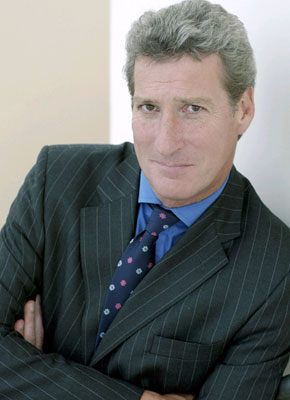
British broadcaster and author Jeremy Paxman, was born in 1950. The eldest of four children, Paxman led a privileged childhood, receiving education from both Charterhouse and Cambridge and editing student magazine 'Varsity'. Indeed journalism quickly became the centre of Paxman's life, as he joined the BBC's graduate training scheme, beginning his career on Brighton local radio. He rose swiftly through the ranks, presenting high profile shows such as 'Panorama'within 7 years, and following reporting duties in Beruit, Uganda and Central America, he anchored the flagship Six O'clock News. Y

et perhaps his most recognisable role is that of intrusive interviewer on 'Newsnight', a notoriety best borne out in the famous 1997 confrontation with Michael Howard, in which he asked the them Home Secretary, the same question 12 times. His current portfolio also includes popular quiz programme 'University Challenge', bringing his estimated salary up to £1,040,000 per year. Aside from all his media committments, Paxman has also found the time to write several books. Titles such as 'The Political Animal: An Anatomy', 'Friends in High Places: Who Runs Britain?', and 'The English: A Portrait of a People', have all been big sellers.   

Monday, 10 May 2010

Bad days in literature...


The elections results have put smiles on some faces, but as polticians lose seats by the bucketload, many are being replaced by grimaces. Yet it's not only the country's leaders who have found themselves in turmoil. Literature is filled with characters who face difficulties, be it money, love or unforseen circumstances. Here is a quiz on some such fictional events.

Friday, 30 April 2010

Elections in literature...


The leadership television debates may be over, but the real fight is only just beginning. Brown, Clegg, Cameron - each is gunning for the popular vote.Yet these are not the political figures to grace the public eye. Elections have featured in literature for centuries, appearing particularly frequently in the Victorian era, at a time when the widening of the voting franchise was an emotive and contemporary issue. Here is a quiz on elections in literature

Thursday, 22 April 2010

On this day...


Vladimir Lenin, former leader of the Soviet Union, was born in 1870. A Russian revolutionary, Lenin headed the state in its initial years, between 1917 and 1924, and was also an accomplished political scientist, authoring numerous works on the subject. His extensive bibliography, a volume of 54,650 pages, comprises of pamphlets, articles and books, as well as correspondence with allies and friends world-wide. The most influential of Lenin's works, include, 'Imperialism, the Highest Stage of Capitalism', 'The State and Revolution' and '"Left-Wing" Communism: An infantile Disorder'. After his death, the USSR selectively censored his writings, removing any contradictions that existed between him, and his successor Stalin.

Friday, 5 March 2010

On this day...


Former Russian leader Joseph Stalin died in 1953 at the age of 74. Viewed by most as a cruel and dictactorial leader, Stalin was the first General Secretary of the Communist Party of the Soviet Union's Central Committee from 1922 and leader of the Soviet Party from 1924. His tenure was marred by famines, rumblings of torture and a non-committal response to Nazi Germany. Yet, perhaps, his most far-reaching and long lasting effect in that of the formation of the Eastern Bloc, a group of countries who existed under the 'iron rule' until its dissolution in 1991.

Stalin is undoubtedly best known for his politics, yet authorship and literary works played no small part in his life. Indeed it was the writings of Lenin that persuaded Stalin to become a Marxist revolutionary and join the Bolsheviks. He himself became and author later in his premiership, as he attempted to rewrite history in textbooks and propaganda, namely to increase his own standing in the revolution and subsequent events. Stalin also established 'socialist realism', by which all arts must be approved by the State to be deemed satisfactory. Such works are supposed to be proletarian, typical, realistic and partisan and included writers such as Maxim Gorky and Mikhail Sholokhov. Thus Stalin is an example of how literature can be manipulated and misused to fulfil a political agenda.

Wednesday, 3 March 2010

On this day...


Former Labour leader Michael Foot, has died today at the age of 96. Not necessarily a name which springs to mind in connection to literature, yet one who work has no doubt contributed to the field. Born into a family of Parliamentarians, albeit from a liberal background, Foot seemed almost destined for political success. Converted to socialism by the influence of the Oxford University Labour Club, and by visits to impoverished areas, Foot's first foray into the political environment was as a journalist for the traditionally left-wing, 'The New Statesman'.

Thus followed numerous other authorial adventures, including a biography of H.G. Wells, culminating in the publication of his book, 'Guilty Men'. Written with colleagues under the pseudonym 'Cato', the work sought to attack 15 men, many of whom were Conservatives, for their policy towards Nazi Germany and so is called the 'classic denouncement of appeasement'. He won his first seat for Labour in 1945, and thus followed 35 years in and out of office, before assuming the position of Leader of the Opposition. Yet after a landslide defeat to Thatcher in 1983, Foot resigned, being replaced by Neil Kinnock. As of his 93rd birthday in 2006, Foot became the longest lived leader of a major British political party.

Monday, 22 February 2010

On this day...


The Republican Party opened with its first national meeting in Pittsburgh, Pennsylvania, 1856. The GOP, or 'Grand Old Party', sits on the right of the American political spectrum and has boasted such presidents as Abraham Lincoln, Theodore Roosevelt, Ronald Reegan and, latterly, the Bush family. Often considered strong on defence and international affairs, the party can be seen as advocating traditional values and of course, tax reduction.

Of course, as with many American companies, musicians and celebrities, writers are often allied with one of the two major political parties. Among the supposed Republican contributors are: Thriller writers Tom Clancy and Clive Cussler, crime author Patricia Cornwell and even teenage favourite Stephanie Meyer. Clancy in particular has donated vast sums of money and has even been mentioned in conjunction with office. On the other side of the aisle, horror writer Stephen King, blockbuster John Grisham and civil rights activist Maya Angelou are seen to be prominenet supporters. Yet whatever party, whichever political affiliation, American writers are some of the best in the world.

Sunday, 21 February 2010

On this day...


Highly influential political work 'The Communist Manifesto'. was published in 1848. It was supposedly authored by Karl Marx and Friedrich Engels, yet the latter himself somewhat disputed this, saying; ' the basic thought... belongs solely and exclusively to Marx...Marx was a genius; we others were at best talented'. Published in London by a group of German refugees in 1848, its popularity spread to the extent that within a few years, the work had been translated into numerous European languages, most notably an English edition two years later. The manifesto itself, is divided into three sections, with a conclusion:
  • Bourgeois and Prolaterians 
                                               
details how the Proletarians will one day rise to power through creation of unions
'The history of all hitherto existing society is the history of class struggles'  

  • Proletarians and Communists  
defends communism from various attacks and outlines short-term demands 
'Political power... is merely the organized power of one class for oppressing another'

  • Socialist and Communist Literature
distinguishes communism from other socialist doctrines which fail to recognise the role of working class
  • Position of the Communists in Relation to the Various Existing Opposition Parties
briefly discusses communist positions in countries such as France, Switzerland, Poland, and Germany 
'Let the ruling classes tremble at a Communistic revolution'

    Saturday, 13 February 2010

    Politics and romance, a potent combination...


    Louise Bagshawe is in the running to win Romantic Novel of the Year Award. An extraordinary achievement, yet nothing too revolutionary. However, Bagshawe, unlike most potentially award winning writers, is also a prospective parliamentary candidate. The Conservative's nomination for Corby and East Northants will soon get used to competing against others for the the ultimate prize, and she faces no tougher field than in the literary world.

    Whilst Bagshawe's 'Passion' has given romance 'a new twist', Rachel Hore, Lucy Dillon, Jean Fullerton, Santa Montefiore and Miranda Dickinson have all got strong entries, making this year's prize provide 'a taste of the broader church of what romantic fiction is'. The winner will be announced on March 16th, but as for the election, who knows?

    Wednesday, 6 January 2010

    Nicolas Sarkozy: President or grave-robber?...


    French intellectuals are up in arms over Sarkozy's latest publicity stunt. An avid reader of Albert Camus from a young age, the French President has decided to move the writer's body to the Panthenon in Paris; the resting place of many of France's literary treasures such as Voltaire, Victor Hugo, Emile Zola and most recently Alexandre Dumas. Yet the move has caused outrage amongst Camus' fans, who refuse to accept the idea of right-wing president taking the body of a left-wing champion or an anti-intellecual, as Sarkozy is often called, grave-robbing an intellectual. The debate is likely to continue for some time.

    Monday, 4 January 2010

    It's raining cats and dogs down under...


    Australian Prime Minister Kevin Rudd, is set to make his publishing debut. Following several other world leaders' literary successes, Rudd has chosen to write his first book - a children's adventure book about his family pets. 'Jasper and Abby and the Great Australia Day Kerfuffle', will be published on Australia Day, January 26th, with proceeds going to a children's charity. Rudd said of the work; 'It has not been the most demanding text I have worked on, I've worked on the text with Rhys (children's TV presenter) and we've both interviewed the cat and the dog. They have been very co-operative in their responses but, for most of the time, have gone off the record.' His previous literary track is impressive. In 2008, Rudd established Australia's richest literary prize, 'The Prime Minister's Literary Awards', worth £56,000, an award he himself judges. It can only be hoped that his foray into writing measures up.

    On this day...


    The Fabian society, a British socialist movement, was founded in 1884. A pre-cursor of the Labour party, the Fabians promoted the rise of social democracy, yet by reformist, as opposed to revolutionary means. Although interesting in itself as a political movement, the Fabian Society is perhaps more  worthy of note for a number of its past members, many with literary connections. One of the co-founders was children's author E. Nesbit, who was closely followed by Irish playwright George Bernanrd Shaw, and later science fiction writer H.G. Wells, a second Irish playwright in Oscar Wilde, and modernist Virginia Woolf. Shaw in particular was an ardent member, giving lectures on other contemporary socialist writers, of which there were many, notably Swedish playwright Henrik Ibsen. Along with three fellows Fabians, Shaw founded the London School of Economics in 1895; a library in LSE is named in his honour.