Showing posts with label Seamus Heaney. Show all posts

Monday, 25 October 2010

Heaney nominated for Eliot's Prize...


Nobel Prize winner Seamus Heaney has been shortlisted for the T. S. Eliot Prize. The poet has been recognised for his collection 'the Human Chain', a work which won him the Forwar Prize earlier this year. Heaney will join his fellow nine shortlisted candidates, including Simon Armitage and Derek Walcott, in a poetry reading at London's Royal Festival Hall on the eve on the announcement, which will take place on January 24th. Founded in 1953, the award comes with a monetary prize of £15,000.

Tuesday, 13 April 2010

On this day...


Irish poet Seamus Heaney was born in 1939. Born himself in Northern Ireland, Heaney believes his background to contain significant tension, containg both the Ireland of the cattle-herding Gaelic past and the Ulster of the Industrial Revolution. It was whilst studying English language and literature at university, that Heaney red Ted Hughes' 'Lupercal', and, in his words, 'suddenly, the matter of contemporary poetry was the material of my own life'. Subsequently, Heaney was introduced to the poetry of Patrick Kavanagh and then joined the Belfast group of young poets, publishing his first collection, 'Eleven Poems', at the age of 26.

Thus has followed a highly succesful literary career, spotted with numerous teaching posts, including the Professor of Poetry at Oxford University. He has written 11 main collections, the last of which won the T.S. Eliot Prize, as well as two plays and several popular translations. Much of his work has, at times, a distinctly nationalistic feel, and Heaney himself even objected at being included in the 1982 'Penguin Book of Contemporary British Poetry'. Yet surely his crowning achievement was being awarded the Nobel Prize for Literature in 1995, for 'works of lyrical beauty and ethical depth, which exalt everyday miracles and the living past'. 

Wednesday, 17 March 2010

On this day...


As today is, of course, St. Patrick's day, it seems appropriate to have a look at some of the great literature Ireland has produced. Bursting forth with the dual force of playwrights Oscar Wilde and George Bernard Shaw, Irish literature really found its feet in the nineteenth and twentieth centuries.Of course there had been notable writers before, such as Jonathan Swift and Oliver Goldsmith, yet none had, or possibly ever will, hit the heights that both Wilde and Shaw achieved. 'The Importance of Being Earnest', 'The Picture of Dorian Gray', 'Pygmalion', 'Mrs. Warren's Profession' - all caused scandal, reality, shock or acceptance, yet above all, they are alll regarded as some of the finest examples of literature.

Although Wilde did write one novel, Ireland's best prose writers are found in the form of Bram Stoker, creator of 'Dracula', and later modernist James Joyce, whose best known work is 'Ulysses'. Finally, so as not to exclude any genre, Ireland has a history of great poets. William Butler Yeats is arguably the most recognisable, courtesy of such works of 'The Tower'. Yet, of course, Ireland still has a poet very much in the spotlight, in Seamus Heaney, creator of such collections as 'The Spirit Level'. Ireland has been the recepient of 4 Nobel Prizes for Literature, and can boast about having one of the oldest literary traditions, after Greek and Latin.

Friday, 27 November 2009

On this day...


Alfred Nobel signed his last will and testament in Paris in 1895, leaving a large proportion of his estate for the establishment of a prize. Best known as the inventor of dynamite, the Swedish chemist had been prompted to do this, after a premature obituary 7 years previous, in which it said: 'Dr. Alfred Nobel, who became rich by finding ways to kill more people faster than ever before, died yesterday'. His subsequent wish to leave a greater legacy meant that 31,225,000 Swedish Kronor were given to fund 5 prizes; one in physical science, one in chemistry, another in medicine, the fourth for literary work 'in a ideal direction', and the final one for service to the international fraternity. After Nobel's death in 1896, his family refused to follow these instructions, and therefore it was not until 1901 that the first Nobel Prizes were awarded. The list of Literature Laureates is prestigious, and includes names such as William Butler Yeats, George Bernard Shaw, John Steinbeck, Seamus Heaney and even Winston Churchill. To date there have been 102 Laureates.

Monday, 23 November 2009

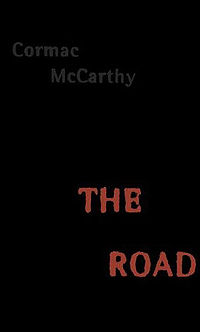
McCarthy rules the naughties...


The Times, has published a list of the '100 Greatest Books of the Decade'. Including works from all genres, Carol Ann Duffy, Simon Armitage and Seamus Heaney are the ambassadors for poetry, with 'Rapture', 'Sir Gawain and the Green Knight' and 'District and Circle' respectively. Non- fiction works also feature; Obama's autobiography leads the list at number 2, and Dawkins, Bryson and grammatical work 'Eats, Shoots and Leaves' occupy a place in the top 100. Naturally the list is dominated by fiction novels, with household names, such as Ian McEwan and J.K. Rowling, as well as Man Booker Prize winners Yann Martel and Aravind Adiga. Cormac McCarthy's 'The Road', was voted as the greatest book of the decade. Running in conjunction, was the '5 Worst Books of the Decade'; a list including 'Being Jordan' by Katie Price. Author Dan Brown has the unusual accolade of being cited on both lists; perhaps testament to the success of his novels in both polarising opinion and raising publicity.