Saturday, 5 December 2009

On this day...


French author Alexandre Dumas died in 1870, at the age of 68. Grandson of the Haitian artillery High Commissioner, Dumas family had numerous military connections; his own father was a general in Napolean's army. It was this that inspired much of Dumas' subsequent literature, his widowed mother regaling her son with stories of his father's military heroism. A participator in the political scene, Dumas helped to oust Charles X and place Louis-Philippe I on the throne, ending press censorship and revitalising the ecomony; both crucial for helping Dumas to achieve his success. Dumas' works have been translated into almost 100 languages and have been the inspiration for over 200 films; his most famous being, 'The Count of Monte Cristo' and 'The Three Musketeers'. Dumas' body was exhumed in 2002 to be buried in the Panthenon alsongside French literary greats Emile Zola and Victor Hugo. President Chirac, present at the ceremony, said of Dumas; 'With you, we were D'Artagnan, Monte Cristo, or Balsamo, riding along the roads of France, touring battlefields, visiting palaces and castles — with you, we dream.'

Friday, 4 December 2009

What's on stage?...


Nominations for Whatsonstage.com Theatre Awards have been announced. Lenny Henry, who won a London Evening Standard Theatre Award last month for his performance as Othello, has been nominated for best newcomer, along with previous X Factor finalist Diana Vickers, who plays the lead in 'The Rise and Fall of Little Voice'. Fellow Standard winner Rachel Weisz is nominated for best actress, due to her role in 'A Streetcar Named Desire'; a category also including famous film actress Helen Mirren, nominated for 'Phedre'. Other notable nominations include, Jude Law for best actor, following his success in Hamlet and former Spice Girl Melanie C for best takeover role in 'Blood Brothers'. The winners will be announced on February 14th.

On this day...


American novelist Cornell Woolrich, was born in 1903. Woolrich started his literary career by writing six works, including 'Cover Charge'; all whose inspiration is to be found in the 'Jazz Age' literature of F. Scott Fitzgerald. Yet after finding them commercially unviable, Woolrich turned his hand to detective novels, often writng under pseudonyms of William Irish and George Hopley. This proved more successful, leading to Woolrich being rated by biographer Francis Nevins Jr., as the fourth best crime writer of his era, behind only Raymond Chandler, Dashiell Hammet and Erle Stanley Gardner. Many of Woolrich's most famous works were adapted for screen, including Hitchcock's 'Rear Window', and Truffaut's 'The Bride Wore Black; this leads to him having the title of more film noir screenplays adapted from his works than any other writer. Woolrich died in 1968 at the age of 64; yet alcoholism and further trouble, meant that upon his death he weighed only 89 pounds. He left his $850,000 estate to Columbia University.

Thursday, 3 December 2009

Zimbabwe's finest...


The winner of the Guardian First Book Award was announced yesterday. Zimbabwean Petina Gappah, honoured for 'An Elegy for Easterly', is only the second short story writer to win in the award's history, the first being Yiyun Li in 2006. Juding chair Claire Armitstead said of the author, 'Petina Gappah's humane and disarmingly funny mosaic of life in Zimbabwe is undoubtedly one of the very best', adding that she would be very interested to see Gappah's next endevour in the literary field. In answer to this, Gappah is already writing her first full length novel, 'The Book of Memory'. She called it 'incredible' to be awarded the £10,000 prize. A video detailing all the shortlisted candidates and with interviews from the authors can be found here

On this day...


Tennessee Williams' 'A Streetcar Named Desire', debuted on Broadway in 1947. The cast included a young Marlon Brando and Jessica Tandy; the latter would go on to win a Tony Award for her performance. Despite its frank depictions of bith sex and violence, the production was hugely successful, running for over 800 performances; it is said that after a minute of stunned silence, the opening night ended with a round of applause lasting 30 minutes. It was from this role that Brando launched his hugely successful career, during which he achieved two Oscars and a further eight nominations; Williams was also honoured, receiving the Pulitzer Prize for Drama. The production was made into a film in 1951, featuring many of the original members of the stage cast. Williams, who wrote the screenplay, was asked to remove the rape scene but refused; leading the Catholic League of Decency to demand that Stanely must received due punishment, and so a rewritten ending sees Stella leaving Stanely. Rachel Weisz won a London Evening Standard Theatre Award for her depiction of Blanche DuBois in a recent production.

Wednesday, 2 December 2009

Cormac shuns computers...


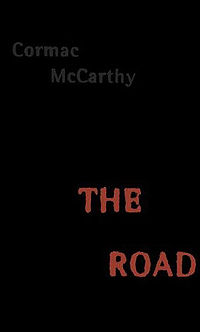
Author Cormac McCarthy is selling the typewriter which he used to write all his books. Author of such works as 'The Road', and recent cinematic success 'No Country for Old Men', McCarthy estimates that the typewriter has seen 'about five million words over a period of 50 years'. He bought the typewriter in 1963 from a pawn shop for the price of $50 and has not serviced it since; part of his reason for auctioning it being its 'serious signs of wear'. The typewriter will be auctioned at Christie's in New York on Friday and is expected to fetch up to $20,000 (£13,200); the money from the sale will go towards the Santa Fe institute, a scientific reasearch centre. Yet McCarthy refues to transfer to computers, and has found a replacement typewriter of the same make for $11.

On this day...


French writer and revolutionary, Donatien Alphonse François,Marquis de Sade, died in 1814 at the age of 74. Born into an aristocratic family, the Sades claimed to be the oldest Frank-descended nobility, and so the men alternated between using the titles 'Count' and 'Marquis'; however subsequent generations have refused to use 'Marquis' so as deny association with Donatien. Influenced by Voltaire, Sade philosophised on freedom of speech, yet took the measure to the extreme, advocating liberty to the detrement of religion, morality and law. Involved in numerous scandals, including poisoning and sodomy, Sade spent 32 years of his life occupying either prisions or insane asylums, including ten in the Bastille. Consequently many of his works were written in confinment, and indeed many feature themes which go against institutions of the day; a reoccuring motif being blasphemy against the Catholic Church. Sade's works gave rise to 'sadism' entering the language as a derivative of his name, and this is epitomised no more so than in his best known work, 'The School of Licentiousness'.

Tuesday, 1 December 2009

Religious approval for Hughes?...


Poet Ted Hughes may be honoured with a plaque in Westminster Abbey's Poets' Corner. The Dean of Westminster said that he had received a number of letters persuading him to the cause; a cause supported by fellow poets Seamus Heaney and Andrew Motion. A former Poet Laureate, Hughes is best known for his marriage to Sylvia Plath, whose subsequent suicide in 1963 shocked the literary world. If selected for a plaque, Hughes would be the first since the man he succeeded as Poet Laureate in 1984, John Betjeman; and would join the likes of Thomas Hardy, William Blake and T.S. Eliot. Hughes died in 1998, and is described by Heaney as 'one of the vital presences in 20th century poetry.'

On this day...


Percy Bysshe Shelley's 'Adonais' was first published in England in 1821. Perhaps one of the most poignant elegies in the English language, Shelley's poem was written for fellow romantic poet John Keats, who had died earlier that year at the age of only 25. The title is thought to be a combination of Greek god Adonis and Hewbrew for Lord, Adonai; and so idealised Greek themes of beauty, nature and romance feature heavily throughout. Having been introduced in 1816, Shelley and Keats were close companions; Shelley saying of the latter, after inviting him to stay; 'I am aware indeed that I am nourishing a rival who will far surpass me and this is an additional motive and will be an added pleasure.' When Shelley died in a year later, at the age of 22, his body was found washed up with a copy a Keats' work in his pocket.

Monday, 30 November 2009

Wyld to win...


The winner of the John Llewellyn Rhys Prize has been announced today as Evie Wyld. The debut novelist beat off competition from Booker Prize winner Aravind Adiga and Orange Prize winner Chimamanda Ngozi Adichie. Set in eastern Australia, where her family own a sugar cane farm, 'After the Fire, A Still Small Voice', was acclaimed by the judges as, 'fantastically mature... never showy, a slow burn that drags the reader in...Wyld captures the inflections of male speech and male bonding in a way that feels both acute and realistic.' Wyld, a bookseller from Peckham, walks away with a £5,000 prize. Previous winners include Margaret Drabble and Andrew Motion.

On this day...


Samuel Clemens, better known by pen name Mark Twain, was born in 1835. Twain began his literary career at the age of 12, contributing articles and sketches to the 'Hannibal Journal'; a newspaper owned by his brother. Yet deciding that it held better monetary prospects, with wages approximately equivalent to that of $155,000 today, Twain opted instead for the job of a steamboat captain; a job he held until the start of the civil war two years later. This conflict, as well as his upbringing in slave state Missouri, left him with a deep impression, and so slavery appears as a reoccuring theme throughout his works. After his brief nautical career, Twain moved back to writing, and it was then that he made his first breakthrough, with novel, 'The Celebrated Jumping Frog of Calaveras County'. However, his two most popular works are undoubtedly 'Adventures of Huckleberry Finn' and 'The Adventures of Tom Sawyer'; the former has come to be recognised as the 'Great American Novel'. Twain suffered great tragedy in his life, losing prematurely his father, daughter and wife; leading to bouts of depression. Twain himself died in 1910, at the age of 74.

Sunday, 29 November 2009

Darwin gone down the toilet?...


A rare book, kept in the toilet, was sold at auction earlier this week for over £100,000. Kept in the guest lavatory, a first edition of Charles Darwin's 'On the Origin of Species', had been bought 40 years ago for just a few shillings. One of only 1,250 copies produced in 1859, the owner first realised the significance of the book when visiting a Darwin exhibition earlier this year; recognising a picture of its gilt decorated spine and green cloth cover. Described as 'lightly bumped' around the edges, it went on sale at auctioneers Christie's earlier this week, on the date of its 150th anniversary and fetched £103, 250.

On this day...


A notice appeared in the Richmond, Viriginia 'Inquirer' in 1811, asking for donations for destitute Eliza Poe and her two children. Dying from tuberculosis, she wrote: 'To the Humane Heart. On this night Mrs Poe, lingering on the bed of disease and surrounded by her children, asks your assistance and asks it perhaps for the last time.' She died a week later at the age of 24, leaving behind two year old Edgar, and younger sister Rosalie; Edgar supposing to have been named after a character in 'King Lear' in a symbol of Eliza's Shakespearian acting past. Successful Scottish merchant John Allan, who dealt in tobacco, slaves, tombstones and other such savoury products, took Edgar into their house, giving him the name by which he is best known; that of Edgar Allan Poe. Sadly, the death of his mother was later to be reflected with that of his wife, who also died at twenty four, and of tuberculosis.

Saturday, 28 November 2009

Short story award...


The shortlist for the BBC National Short Story Award was announced yesterday. For the first time, it has been an all women affair, including names such as Lionel Shriver, Sara Maitland and Naomi Alderman. One of the nominated stories will be read each afternoon on BBC Radio 4 at 3:30p.m. during next week, with the winner announced on the 7th December. Dame Margaret Drabble is part of a judging panel which also includes broadcaster Tom Sutcliffe, who said of the prize, 'What's exciting about the short story is that there are less limits... excellent writing in very different forms and voices'. The winner of the accolade will receive £15,000, the runner up £3,000 and a further three authors £500 each.

On this day...


American author and historian, Washington Irving, died in 1859 at the age of 76. He made his literary debut in 1802, writing letters to the 'Morning Chronicle' under pseudonym Jonathan Oldstyle. Having moved to England in 1815 to help the family business, Irving furthered his budding enthusiasm for writing, and by 1819 he had published his best known work, 'The Sketch Book of Geoffrey Crayon. The collection of short stories were published in seven installments, and included 'Rip Van Winkle' and 'The Legend of Sleepy Hollow'. Also a historian, Irving wrote numerous biographies of figures such as George Washington, Oliver Goldsmith and Christopher Columbus. He is among the first American authors to gain acclaim in Europe and preceeding other trans-Atlantic successes Nathaniel Hawthorne, Herman Melville and Edgar Allan Poe. Irving is the reason behind two slightly more obscure pieces of trivia; he popularised the name 'Gotham' for New York city, as used in the Batman comics, and also introduced the dubious belief that the people of the Middle Ages thought the Earth to be flat.

Friday, 27 November 2009

Coffee, biscuits and books...


Hilary Mantel has been shortlisted this week for the Costa Book Awards. Mantel had literary success earlier this year, winning the Man Booker Prize with her new novel, 'Wolf Hall'. An historical novel, 'Wolf Hall' is based on Thomas Cromwell, and his rise to power in the Tudor dynasty; the judges said that Mantel was awarded the prize for 'The extraordinary way that [she] has created what one of the judges has said was a contemporary novel, a modern novel, which happens to be set in the 16th century.' Up against her in the Costa awards, are novelists Penelope Lively, Colm Toibin and Christopher Nicholson. The winner of the £5,000 award will be announced on January 26th.

On this day...


Alfred Nobel signed his last will and testament in Paris in 1895, leaving a large proportion of his estate for the establishment of a prize. Best known as the inventor of dynamite, the Swedish chemist had been prompted to do this, after a premature obituary 7 years previous, in which it said: 'Dr. Alfred Nobel, who became rich by finding ways to kill more people faster than ever before, died yesterday'. His subsequent wish to leave a greater legacy meant that 31,225,000 Swedish Kronor were given to fund 5 prizes; one in physical science, one in chemistry, another in medicine, the fourth for literary work 'in a ideal direction', and the final one for service to the international fraternity. After Nobel's death in 1896, his family refused to follow these instructions, and therefore it was not until 1901 that the first Nobel Prizes were awarded. The list of Literature Laureates is prestigious, and includes names such as William Butler Yeats, George Bernard Shaw, John Steinbeck, Seamus Heaney and even Winston Churchill. To date there have been 102 Laureates.

Thursday, 26 November 2009

Le théâtre...


A new translation product has been launched today, enabling theatre goers to read the play in eight different languages. The AirScript devices, which have a battery life of six hours, can translate the play realtime, into English, French, German, Italian, Spanish, Russian, Japanese or Chinese, with captions received over wifi. Costing £6 to hire per performance, London's Shaftesbury Theatre is the first to offer the service, for their current prooduction 'Hairspray'. They contain little software, and as such, there is a manual operator working the translators line by line every night; a job he describes as 'like playing two and a half hours of Guitar Hero'. It is hoped that this new product will help increase tourism in London's West End.

On this day...


Oxford mathematician Charles Lutwidge Dodgson sent a handwritten manuscript of 'Alice's Adventures Under Ground' to Alice Liddell in 1864. Dodgson, better known by pseudonym Lewis Carroll, found inspiration for the work from a boat trip down the Isis river, during which he told a story to entertain three young sisters on board, one of whom was Alice Liddell. His idea proved so popular that Dodgson spent the next two years writing it out by hand; bound in morocco leather and illustrated by his own hand, he gave it to Alice as a Christmas present with the inscription, ‘A Christmas gift to a dear child, in memory of a summer’s day’. At this time Dodgson was already expanding the novel, adding in such episodes as the Cheshire Cat and Mad Hatter, to ready it for publication. Published in 1865, 'Alice's Adventures in Wonderland' was immediately popular, with Queen Victoria and Oscar Wilde said to be among its readers. The book has now been translated in over 125 languages and has a sequel, 'Through the Looking-Glass, and What Alice Found There'.

Wednesday, 25 November 2009

Messy Dickens a New York success...


A new exhibition has opened in New York, based around a handwritten manuscript of 'A Christmas Carol'. The famous Dickens novel was written in a period of six weeks, starting from October 1843, and according to exhibition curators, the speed is obvious. 'The manuscript is a mess', showing Dickens' revisions and annotations and revealing the way in which the plot was developed; for instance, the name Bob Cratchit was not thought of until midway through writing. Originally written for quick commercial success, due to failing finances after last novel 'Martin Chuzzlewick, the initial print run sold 6,000 copies in one week and has never been out of print since. It has been adapted innumerable times for stage and screen; the most recent being Jim Carey's film version, which premiered earlier this month. The book, bound in red morocco leather, along with other Dickensian items are on display in the Morgan Library in New York until January 2010.

On this day...


Agatha Christie's 'The Mousetrap' premiered in 1952 at London's Ambassadors Theatre. Originally written for Queen Mary, wife of the late King George V, 'Three Blind Mice' appeared in 1947 as a 30 minute radio play. Four years later, the re-titled 'The Mousetrap' made its stage debut, in an era including Churchill, Stalin and Eisenhower among the world leaders. From the initial 453 strong crowd, the play has gone on to become the longest continuously running play in history; more than 10 million people have attended over 20,000 performances in London's West End. The show also boasts an impressive number of actors and actresses; over 300, including Richard Attenborough and wife, Sheila Sim. Christie's view of her play's popularity was that, 'It is not really frightening. It is not really horrible. It is not really a farce, but it has a little bit of all these things, and perhaps that satisfies a lot of different people.' The play is now performed at St. Martin's Theatre.

Tuesday, 24 November 2009

Weisz of the right standard...


The winners of the London Evening Standard theatre awards were announced yesterday. After the nominations earlier this month, Lenny Henry won the Outstanding Newcomer prize for his portrayal of Shakespeare's Othello. At the ceremony, Henry joked, 'I must be the oldest newcomer there has ever been - which means there is hope for Bruce Forsyth's King Lear'. The accolade of Best Actress went to a 'thrilled and honoured' Rachel Weisz for her performance in Williams' 'A Streetcar Named Desire'; an award named after the late Natasha Richardson and presented by her mother Vanessa Redgrave. Sir Ian McKellen was the recipient of a special honour for his contribution to theatre, whose resume includes numerous plays by Shakespeare, Chekhov and Shaw respectively. Alexander Lebedev, owner of the Standard precised the ceremony by saying, 'What we have seen in the past year in London's theatres is innovative and inspiring.'

On this day...


Charles Darwin's 'On the Origin of Species', was published in 1859. Considered the foundation of evolutionary biology, Darwin introduced the theory that a population evolves through the process of natural selection. The book included evidence that Darwin had gathered from his Beagle expedition across the Atlantic in the 1830s. Although at first the work incurred a hostile reception, it immediately sold out its initial print run and a further five editions were released before 1872. Perhaps one reason for the book's astonishing popularity, was its representation of a Victorian era seeing a growing divide between religion and science; many people were struggling with the faith that had previous been taken as incontrovertible and Darwin was giving this doubt a voice. Numerous Victorian literary figures encountered similar reservations, the most famous being Thomas Hardy, George Bernard Shaw and George Eliot. The two hundredth anniversary of Darwin's birth was celebrated earlier this year.

Monday, 23 November 2009

McCarthy rules the naughties...


The Times, has published a list of the '100 Greatest Books of the Decade'. Including works from all genres, Carol Ann Duffy, Simon Armitage and Seamus Heaney are the ambassadors for poetry, with 'Rapture', 'Sir Gawain and the Green Knight' and 'District and Circle' respectively. Non- fiction works also feature; Obama's autobiography leads the list at number 2, and Dawkins, Bryson and grammatical work 'Eats, Shoots and Leaves' occupy a place in the top 100. Naturally the list is dominated by fiction novels, with household names, such as Ian McEwan and J.K. Rowling, as well as Man Booker Prize winners Yann Martel and Aravind Adiga. Cormac McCarthy's 'The Road', was voted as the greatest book of the decade. Running in conjunction, was the '5 Worst Books of the Decade'; a list including 'Being Jordan' by Katie Price. Author Dan Brown has the unusual accolade of being cited on both lists; perhaps testament to the success of his novels in both polarising opinion and raising publicity.

On this day...


Thomas Hardy's 'Far From the Madding Crowd' was published in 1874. Like so many of Hardy's works, the novel originally appeared in serial form, debuting in 'Cornhill Magazine'; a Victorian literary journal illustrated, among others, by John Everett Millais. Having started life as an architect, 'Far From the Madding Crowd' was Hardy's first successful foray into the literary scene and only the second novel to bear his name; the first being the original cliff-hanger, 'A Pair of Blue Eyes'. It was also the first of Hardy's works to strike the tragic note for which he is best remembered, numerous aspects of the novel foreshadowing elements in both 'Tess of the d'Urbervilles' and 'Jude the Obscure'; yet, unlike his later works, the protagonist still manages to find happiness. The book finished 10th on The Guardian's list of greatest love stories of all time.

Sunday, 22 November 2009

Posthumous pirates...


The first posthumous novel by author Michael Crichton, is set to be published this week. 'Pirate Latitudes', was discovered as a complete manuscript on Crichton's computer soon after his death in 2008, and centres on piracy in Jamaica in the late 17th century. Steven Spielberg has already signed a deal to adapt the novel for film. Another script, only a third complete, was found on Crichton's computer. A writer is to be selected to finished the 'techno-thriller' and it will be published in Autumn next year. Born in 1942, Crichton has been one of the few writers who is genuinely successful across the media; becoming the first creative artist to have works at number one simultaneously in television, film and book sales - ER, Jurassic Park and Diclosure respectively. The 6'9" author, has seen his novels translated into 36 different languages, over 150 million copies of his books sold and 13 of his works turned into films. Other famous titles include, 'The Andromeda Strain', 'Rising Sun', and 'The Great Train Robbery'.

On this day...


Victorian author Mary Anne Evans, later to be known as George Eliot, was born in 1819. Upon the death of her father in 1849, to whom she was devoted, Evans moved to London, where she stayed at the house of John Chapman; the recently installed editor of left-wing journal 'The Westminster Review'. Evans became assisstant editor a year later, contributing numerous essays and reviews until her departure in 1856. Evans' wider literary career was about to launch, yet it was her private life which gathered more public interest; she lived with, and considered herself to be wedded to, married journalist George Lewes. Socially unacceptable in the pious Victorian era, it was these circumstances that forced Evans to adopt pen name George Eliot to hide her marital status; an alias also used to distance herself from the romantic female novelists of the day. During her lifetime she produced many well known works of both prose and poetry; her most famous novels being, 'Middlemarch', 'Silas Marner', and 'The Mill on the Floss'. Evans died in 1880, aged 61.

Saturday, 21 November 2009

Guild v Google...


A US judge has announced the date for the settlement in a major literary legal dispute today. February 18th next year, will see the culmination of the Authors Guild action against Google books in 2005 for a breach of copyright. By scanning texts from the United States and Britain, Google had been creating a digital archive of books, which it hoped to sell on its website; yet the previews for such items included small section of text available for free. The system was admonished by the president of the Authors Guild who stated, 'Authors, not Google, have the exclusive rights to...authorise such reproduction, distribution and display of their works.' But Google fought back, claiming their new project, 'directly benefits authors and publishers by increasing awareness and sales of the books.' A settlement had been agreed last year, with Google agreeing to pay $125 million, to create an independent 'Books Rights Registry' with a proportion of revenue going straight to the author; yet a revised settlement has now been called for, and the case should be resolved next year.

On this day...


François-Marie Arouet, better known by his pen name Voltaire, was born in 1694. Voltaire was a student of classical languages, and it was from this that his pseudonym came; an anagram of Arovet Li, the Latinised version of his surname, just one of the 178 aliases he is known to have taken. Part of the French Enlightenment movement, which included Jean Jacques Rousseau, Voltaire believed in reason as the basis of authority, questioning the traditional institutions and customs of the time. Although a philosopher by first trade, he soon became a prolific writer of almost every literary form; including poetry, drama, novels and more than 20,000 letters. His sharp wit led Voltaire to being imprisioned in the Bastille, then exiled to England, sparking his subsequent attempts to reform the French judicial system. His best known work remains 'Candide', and he died in 1778 aged 83. When asked on his deathbed by a priest to renounce the devil and turn to God, he is alleged to have replied, 'Now is no time to be making new enemies'.

Friday, 20 November 2009

Motion heads Man Booker...


It has been announced that Andrew Motion is to be the chair of judges for next year's Man Booker Prize. The former Poet Laureate, who was involved in accusations of plagiarism earlier this month, said it was an 'exciting challenge' and that he was looking forward 'to a year of reading voraciously'. Following on from Hilary Mantel's victory ealier this year, the longlist of her potential successors will be announced in July; the shortlist of six is published in September, and the winner will be named in October. Previous recipients of the £50,000 award include William Golding, Salman Rushdie, and Ian McEwan.